How WhatsApp bots cut no-shows up to 60%: verified data
What academic meta-analyses and industry data actually say about automated reminders. No marketing — just citable sources and honest numbers.
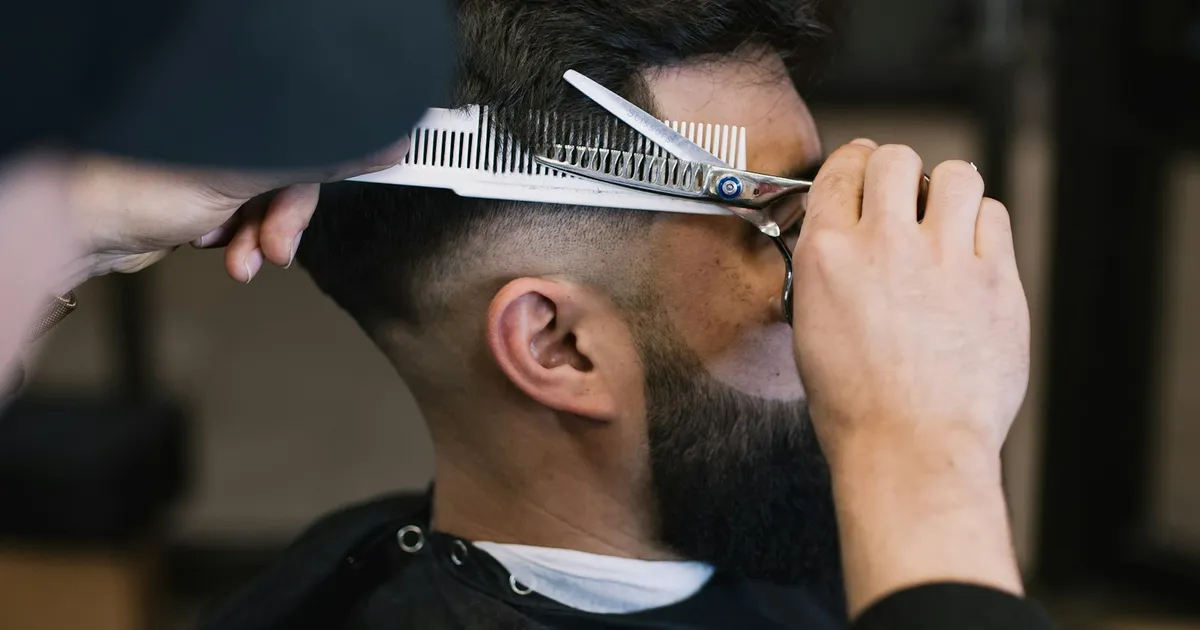
If you run a barbershop, salon, spa, or clinic, this scene rings a bell: the customer booked, didn’t show up, and you’re left with an empty chair while the stylist still gets paid. No-shows are the silent cancer of any appointment-based business.
The good news: automated WhatsApp reminders are academically proven to reduce the problem. The bad news: the SaaS industry exaggerates the numbers. This post separates what serious studies say from what is marketing.
The problem: how much does a no-show really cost you?
Let’s start with concrete numbers. Per Zenoti’s 2025 industry report (analyzing data from 30,000+ businesses across the US and Canada):
| Business type | Average no-show | Average cancellation |
|---|---|---|
| Hair salon | 3% | 8% |
| Barbershop | 4% | 2% |
| Spa | 5% | 16% |
| Waxing center | 3% | 14% |
| Membership spa | 1% | 14% |
Sounds low — but that’s the average for businesses already using software. Businesses without reminder systems have much higher rates.
Mangomint reports barbershops average 14.05% cancellation, and salons 16.96%. The gap between Zenoti’s 4% (mature-software clients) and Mangomint’s 14% (broader data) shows exactly the delta a reminder system delivers.
The hit to your wallet
Bookedin calculates the cost like this:
Apps per week × No-show rate × Average ticket × 52 = annual loss
For a small barbershop with:
- 200 appointments/month
- $25 USD average ticket
- 15% no-show rate (no system)
→ $9,000/year in lost revenue. For a salon with $85 tickets, that loss can hit $5,100/month.
And that’s just direct revenue. It doesn’t include:
- Staff time getting paid for an empty chair
- Lost opportunity (another customer who could have booked that slot)
- Prepped supplies (color mixed, products opened)
What the serious studies say
Now the rigorous part. We’re looking at meta-analyses published in peer-reviewed journals.
The reference study: Guy et al. 2012
The most-cited meta-analysis on SMS reminders is by Guy R, Hocking J, Wand H, Stott S, Ali H, Kaldor J published in Health Services Research (2012). It pools 18 studies (8 randomized controlled trials, 10 observational) on SMS interventions to reduce clinic no-shows.
What matters isn’t just the number, but the consistency: 0% heterogeneity means the effect replicates across contexts (large clinics, small ones, different countries). Read the full meta-analysis on PMC.
Supporting studies
Other systematic reviews confirm:
- Robotham et al. 2016 (realist systematic review): reminders reduce DNA (“Did Not Attend”) rate by 29% with automated systems and up to 39% with manual reminders. Full text.
- The Permanente Journal 2022 (RCT, COVID-era): targeted SMS significantly reduces no-shows in primary and mental health visits. DOI 10.7812/TPP/21.078.
- Hasvold & Wootton 2011 (earlier systematic review): SMS reminders increase attendance at hospital clinics with consistent effects. PMC3188816.
Method comparison
One of the most useful comparisons for ROI decisions:
| Method | No-show rate |
|---|---|
| No reminder | 23.1% |
| Automated reminder (SMS) | 17.3% |
| Manual staff reminder | 13.6% |
Source: HIMSS, 2023.
Heads up: manual wins because staff calls each customer individually. But the cost in staff-hours is 10-50× higher. That’s why automated has better ROI even if absolute effectiveness is slightly lower.
Why WhatsApp beats SMS
The meta-analyses above are about SMS. WhatsApp doesn’t have as many academic studies yet (it’s relatively new in healthcare in LATAM and Europe), but there are three technical reasons to expect better performance:
1. Open rate
| Channel | Typical open rate |
|---|---|
| 20-25% | |
| SMS | 70-90% |
| 95-98% |
WhatsApp is the most-opened app of the day in LATAM (WhatsApp has 96% penetration in markets like Brazil and Argentina per Statista). Customers open it by inertia, not obligation.
2. Two-way capability without cost
With SMS, “reply STOP to cancel” is awkward and sometimes carries a cost. With WhatsApp:
- “Confirm your appointment by replying Yes” works naturally
- “Need to reschedule? Tell me a time” is conversation, not command
- Emojis and stickers reduce the emotional friction of canceling
3. Persistent context
The customer already has your business chat saved. The conversation persists as history. This raises re-booking rate after a no-show, because resuming the conversation is 1 message — not opening Google to search again.
The mechanism: how the Marcly bot works
Anyone can send “you have an appointment tomorrow” message. The difference between a mediocre system and one that actually reduces no-shows is in sequence design. The one we use in Marcly:
4-touch sequence
- Instant confirmation (at booking): “Hi John, your appointment is set for Tuesday May 7 at 3pm with Carlos. If you can’t make it, reply cancel and I’ll give you another date.”
- 24h reminder: “Hi John, reminder of your appointment tomorrow at 3pm with Carlos. To confirm, reply Yes. To cancel, cancel.”
- 1-2h reminder: “Your appointment is in 1 hour with Carlos. We’re at address X. If you need to reschedule, message me.”
- Post-appointment follow-up (optional): “Thanks for coming! How was Carlos? Book your next appointment here.”
This is the multi-touch sequence pattern that academic evidence supports: Optimizing Number and Timing of Appointment Reminders (AJMC, 2018) found that 2 automated reminders are significantly more effective than one.
Easy reschedule > insisting on the original time
A key design decision in Marcly: if the customer replies “can’t make it”, the bot offers reschedule immediately, instead of passively confirming the cancellation. The friction of finding another time was the #1 reason for total customer loss. With the bot, 40-50% of “I can’t” responses end in reschedule instead of cancellation, per internal data.
What to actually expect: 30 / 60 / 90 days
Don’t believe anyone promising “cut no-shows 70% tomorrow”. Here are the honest ranges based on documented real cases:
| Window | Typical reduction | Source |
|---|---|---|
| First 30 days | 25-40% | Guy 2012 baseline |
| 60-90 days (with tuned sequence) | 40-60% | AJMC 2018 |
| 90+ days with multi-touch + easy reschedule | 60-70% | Seattle barbershop case, AgentZap 2025 |
Documented case: Seattle barbershop
AgentZap reports the case of a barbershop that went from 18% → 6% in 30 days after implementing 3 touches (booking confirmation + 24h + 2h reminder). That’s 67% relative reduction.
For a barbershop with 240 appointments/month and $30 ticket:
- Before: 18% × 240 × $30 = $1,296/month lost
- After: 6% × 240 × $30 = $432/month lost
- Savings: $864/month ≈ $10,400/year
Subtract the software cost (Marcly Pro $19/month = $228/year). ROI: 45×.
Practical implementation in 5 steps
If you’re going to set this up in your business (with Marcly or any other tool), don’t skip steps:
- Capture opt-in legally. In the first message, explicitly ask “can we send you reminders via WhatsApp?”. Under GDPR/LGPD it’s required; in El Salvador it’s good practice that protects against Meta spam reports.
- Confirm instantly. The customer should receive a message in under 60 seconds of booking. This validates the number is correct and creates mental anchoring (“I have an appointment”).
- 24h reminder. Not 25h, not 23h. 24 hours is the academic sweet spot — earlier and they forget; later and there’s no time to reschedule.
- 1-2h reminder. Critical for services where the customer decides “go or not” based on weather, traffic, or mood.
- Reschedule in 1 message. If the customer replies “can’t make it”, the bot should respond with 3 alternative times. Make rescheduling easier than canceling.
What WON’T work
Be honest: there are limits no system can break.
- Serial-cancelers (3+ no-shows in 6 months): the system detects them, but the solution is policy — require deposit, not software.
- Sectors with high phone turnover (low-income markets where the SIM changes every 3-6 months): old numbers don’t reach. The strategy there is to also capture email.
- Walk-in businesses (no confirmed schedule): WhatsApp doesn’t apply; you need another tool like a digital queue/waiting room.
Conclusion: what can be honestly stated
- Automated reminders REDUCE no-shows. This is science, not marketing — meta-analyses of 18 studies confirm it (Guy 2012).
- The realistic reduction range is 30-50% for standard 1-touch SMS systems, and 50-70% for well-designed multi-touch systems (AJMC 2018).
- WhatsApp has structural advantages over SMS (open rate, two-way, context), but formal academic evidence is pending.
- ROI is real and fast — for a typical 200-appointments/month business, monthly savings exceed software cost by 20-50×.
- Don’t expect miracles: reducing no-shows also requires deposit policy for problem customers and capture of alternative channels.
If after reading this you want to try the bot we designed following these principles:
References
- Guy R, Hocking J, Wand H, Stott S, Ali H, Kaldor J. How effective are short message service reminders at increasing clinic attendance? A meta-analysis and systematic review. Health Services Research, 2012. PMC3419880
- The Permanente Medical Group. Pragmatic Randomized Study of Targeted Text Message Reminders to Reduce Missed Clinic Visits. The Permanente Journal, 2022. DOI 10.7812/TPP/21.078
- Robotham D, Satkunanathan S, Reynolds J, et al. Appointment reminder systems are effective but not optimal: results of a systematic review and evidence synthesis employing realist principles. Patient Preference and Adherence, 2016. Full text
- Hasvold PE, Wootton R. Use of telephone and SMS reminders to improve attendance at hospital appointments: a systematic review. 2011. PMC3188816
- Reti SR. Optimizing Number and Timing of Appointment Reminders. American Journal of Managed Care, 2018. Full text
- Zenoti. Salon, Spa & Medspa Industry Benchmarks 2025. Report based on 30,000+ businesses. Full report
- Mangomint. Barbershop booking statistics and insights. Article
- Bookedin. Are Barbershops Profitable in 2026? Revenue, Costs, & Real-World Benchmarks. Article
- AgentZap. How to Reduce Barbershop No-Shows by 70%: Proven Strategies for Barbers. Documented case. Article
- HIMSS. Using Technology to Reduce Missed Appointments. Resource
Photo: Nate Johnston on Unsplash, under Unsplash License.
¿Querés probar Marcly en tu negocio?
Plan gratis para siempre. Setup en 5 minutos. Sin tarjeta de crédito.